
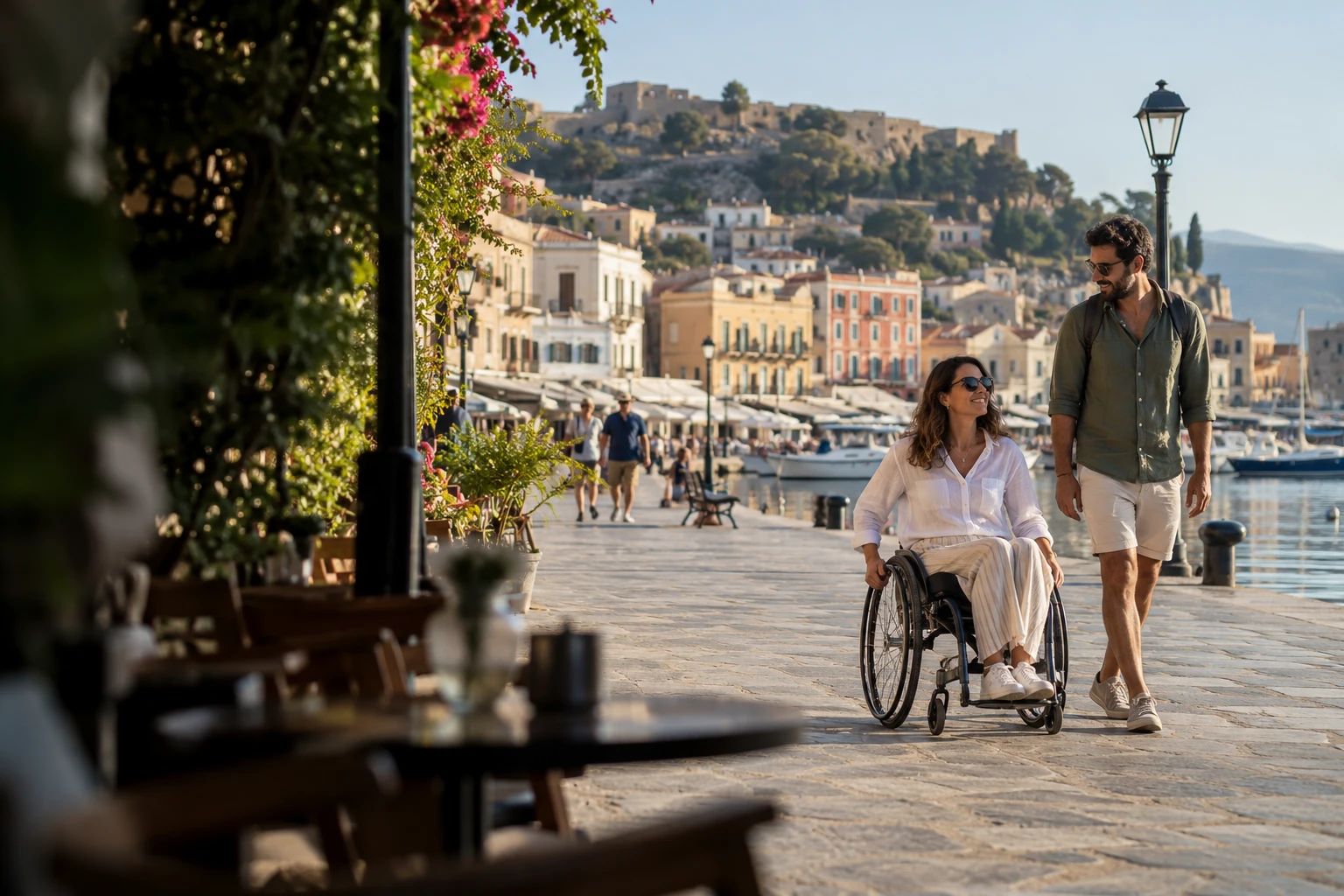

Accessibility depends on the entire trip. Infrastructure, accurate information and coordinated services must support the visitor from planning to return.
A hotel may have a suitable room while the guest cannot confirm an airport transfer or access an activity. A single missing connection can make the trip impractical despite improvements elsewhere.
Accessibility across the tourism offer
In its March 2026 contribution to the EU Sustainable Tourism Strategy, the European Network for Accessible Tourism connects accessibility with universal design and professional training. It also calls for better information on needs, services and investment outcomes. This is the organisation’s policy proposal. [1]
Different mobility, sensory and other access needs require specific information. A general “accessible” label gives a traveller too little detail to judge suitability.
Information as part of service
Describe the features actually available. Photographs, relevant measurements, the presence of steps, routes into the property and specific support services allow visitors to make an informed decision.
Limitations and changes also need to be communicated. An unavailable lift or a change to transport can materially affect a trip. Early, accurate information allows visitors to look for alternatives.
Check the entire online process, including external reservation tools. Useful descriptive content cannot compensate for a room selector or enquiry form that a visitor cannot use. Testing with people who have different access needs can identify obstacles that regular users overlook.
Coordinating a complete route
A destination can begin with selected journeys connecting transport, accommodation, food service and an attraction. Each partner needs to know what it can provide, how the service is confirmed and who communicates changes.
Evaluation can track requests served, barriers reported and corrections completed. Improvements should be described in terms that visitors can verify. Reliable information and functioning connections give more people the ability to plan and complete a trip independently.
Sources and further reading
Source review completed on 11 October 2026. Operational proposals are Tourism Strategy editorial analysis.